
Lecture Reading Materials,
Lab and Museum info.
Lecture_American Culture & Society
1. PERSONAL CONTROL OVER THE ENVIRONMENT

Many Americans no longer believe in the power of Fate, and they have come to look at people who do as being backward, primitive, or hopelessly naïve. To be called “fatalistic” is one of the worst criticisms one can receive in the American context; to an American, it means one is superstitious and lazy, unwilling to take any initiative in bringing about improvement. In the United States, people consider it normal and right that Man should control Nature, rather than the other way around.
More specifically, people believe every single individual should have control over whatever in the environment might potentially affect him or her. The problems of one’s life are not seen as having resulted from bad luck as much as having come from one’s laziness in pursuing a better life. Furthermore, it is considered normal that anyone should look out for his or her own self-interests first and foremost. Most Americans find it impossible to accept that there are some things that lie beyond the power of humans to achieve. And Americans have literally gone to the moon, because they refused to accept earthly limitations. Americans seem to be challenged, even compelled, to do, by one means or another (and often at great cost) what seven-eighths of the world is certain cannot be done.
Discussion Questions:
1. What is the Vietnamese value regarding personal control over the environment? How is it different from the American value?
2. What are the benefits of believing that Man should control Nature? What are the disadvantages of owning this value?
2. CHANGE

In the American mind, change is seen as an indisputably good condition. Change is strongly linked to development, improvement, progress, and growth. Many older, more traditional cultures consider change as a disruptive, destructive force, to be avoided if at all possible. Instead of change, such societies value stability, continuity, tradition, and a rich and ancient heritage—none of which are valued very much in the United States. These first two values—the belief that we can do anything and the belief that any change is good—together with an American belief in the virtue of hard work and the belief that each individual has a responsibility to do the best he or she can do have helped Americans achieve some great accomplishments. So whether these beliefs are true is really irrelevant; what is important is that Americans have considered them to be true and have acted as if they were, thus, in effect, causing them to happen.

Discussion Questions:
1. How do you see change? Is change a good thing or a bad thing?
2. How do you respond to change? How does your response to change affect your life?
3. TIME AND ITS CONTROL
Time is, for the average American, of utmost importance. To the foreign visitor, Americans seem to be more concerned with getting things accomplished on time (according to a predetermined schedule) than they are with developing deep interpersonal relations.
Schedules, for the American, are meant to be planned and then followed in the smallest detail. It may seem to you that most Americans are completely controlled by the little machines they wear on their wrists, cutting their discussions off abruptly to make it to their next appointment on time. Americans’ language is filled with references to time, giving a clear indication of how much it is valued. Time is something to be “on,” to be “kept,” “filled,” “saved,” “used,” “spent,” “wasted,” “lost,” “gained,” “planned,” “given,” “made the most of,” even “killed.” The international visitor soon learns that it is considered very rude to be late—even by 10 minutes—for an appointment in the United States. (Whenever it is absolutely impossible to be on time, you should phone ahead and tell the person you have been unavoidably detained and will be a half hour—or whatever—late.)

Time is so valued in America, because by considering time to be important one can clearly accomplish more that if one “wastes” time and does not keep busy. This philosophy has proven its worth. It has enabled Americans to be extremely productive, and productivity itself is highly valued in the United States. Many American proverbs stress the value in guarding our time, using it wisely, setting and working toward specific goals, and even expending our time and energy today so that the fruits of our labor may be enjoyed at a later time. (This latter concept is called “delayed gratification.”)
Discussion Questions:
1. How important is time in Vietnamese culture?
2. Is it more important to get things accomplished on time according to a predetermined schedule or is it more important to develop deep interpersonal relations even if it means putting aside the task at hand?
4. EQUALITY/EGALITARIANISM

Equality is, for Americans, one of their most cherished values. This concept is so important for Americans that they have even given it a religious basis. They say all people have been “created equal.” Most Americans believe that God views all humans alike without regard to intelligence, physical condition or economic status. In secular terms this belief is translated into the assertion that all people have an equal opportunity to succeed in life. Americans differ in opinion about how to make this ideal into a reality.
Yet virtually all agree that equality is an important civic and social goal. The equality concept often makes Americans seem strange to foreign visitors. Seven-eighths of the world feels quite differently. To them, rank and status and authority are seen as much more desirable considerations—even if they personally happen to find themselves near the bottom of the social order. Class and authority seem to give people in those other societies a sense of security and certainty.
People outside the United States consider it reassuring to know, from birth, who they are and where they fit into the complex system called “society”. Many highly-placed foreign visitors to the United States are insulted by the way they are treated by service personnel (such as waiters in restaurants, clerks in stores, taxi drivers, etc.). Americans have an aversion to treating people of high position in a deferential manner, and, conversely often treat lower class people as if they were very important. Newcomers to the United States should realize that no insult or personal indignity is intended by this lack of deference to rank or position in society. A foreigner should be prepared to be considered “just like anybody else” while in the country.
Discussion Questions:
1. Define equality in your own words.
2. How are class and authority viewed in Vietnamese culture?
5. INDIVIDUAL AND PRIVACY
:max_bytes(150000):strip_icc()/what-are-individualistic-cultures-2795273-5bcdfc01c9e77c0051d808e1.png)
The individualism that has been developed in the Western world since the Renaissance, beginning in the late 15th century, has taken its most exaggerated form in 21st century United States. Here, each individual is seen as completely and marvelously unique, that is, totally different from all other individuals and, therefore, particularly precious and wonderful. Americans think they are more individualist in their thoughts and actions than, in fact, they are. They resist being thought of as representatives of a homogenous group, whatever the group. They may, and do, join groups—in fact many groups—but somehow believe they’re just a little different, just a little unique, just a little special, from other members of the same group. And they tend to leave groups as easily as they enter them.

Privacy, the ultimate result of individualism is perhaps even more difficult for the foreigner to comprehend. The word “privacy” does not even exist in many languages. If it does, it is likely to have a strongly negative connotation, suggesting loneliness or isolation from the group. In the United States, privacy is not only seen as a very positive condition, but it is also viewed as a requirement that all humans would find equally necessary, desirable and satisfying. It is not uncommon for Americans to say—and believe—such statements as “If I don’t have at least half an hour a day to myself, I will go stark raving mad.”
Individualism, as it exists in the United States, does mean that you will find a much greater variety of opinions (along with the absolute freedom to express them anywhere and anytime) here. Yet, in spite of this wide range of personal opinion, almost all Americans will ultimately vote for one of the two major political parties. That is what was meant by the statement made earlier that Americans take pride in crediting themselves with claiming more individualism than, in fact, they really have.
Discussion Questions:
1. When you make a decision or take an action, do you tend to be more individualistic or collectivistic?

2. What are the advantages and disadvantages of being individualistic?
6. SELF-HELP CONTROL
In the United States, a person can take credit only for what he or she has accomplished by himself or herself. Americans get no credit whatsoever for having been born into a rich family. (In the United States, that would be considered “an accident of birth.”) Americans pride themselves in having been born poor and, through their own sacrifice and hard work, having climbed the difficult ladder of success to whatever level they have achieved—all by themselves.
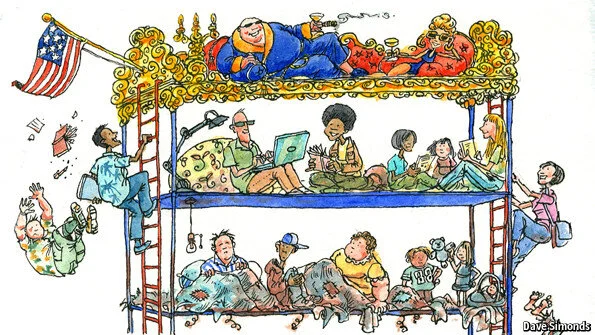
The American social system has, of course, made it possible for Americans to move, relatively easily, up the social ladder. Take a look in an English-language dictionary at the composite words that have “self” as a prefix. In the average desk dictionary, there will be more than 100 such words, words like selfconfidence, self-conscious, self-control, self-criticism, self-deception, self-defeating, self-denial, self-discipline, self-esteem, self-expression, self-importance, self-improvement, self-interest, selfreliance, self-respect, self-restraint, self-sacrifice—the list goes on and on. The equivalent of these words cannot be found in most other languages. The list is perhaps the best indication of how seriously Americans take doing things for one’s self. The “self-made man or women” is still very much the ideal in 21st-century America.

Discussion Questions:
1. What is the Vietnamese value regarding self-help? Do people in your culture take pride in having climbed the ladder of success all by themselves more than being born into a rich family?
2. Do you think it is possible to be a self-made man or woman?

7. COMPETITION AND FREE ENTERPRISE

Americans believe that competition brings out the best in any individual. They assert that it challenges or forces each person to produce the very best that is humanly possible. Consequently, the foreign visitor will see competition being fostered in the American home and in the American classroom, even on the youngest age level. Very young children, for instance, are encouraged to answer questions for which their classmates do not know the answer. You may find the competitive value disagreeable, especially if you come from a society that promotes cooperation rather than competition. But many U.S. Peace Corps volunteers teaching in Third World countries found the lack of competitiveness in a classroom situation equally distressing. They soon learned that what they thought to be one of the universal human characteristics represented only a peculiarly American (or Western) value.
![Neoliberalism and Education [licensed for non-commercial use only] / Competitive Individualism](https://neoliberalismeducation.pbworks.com/f/1330626576/competitive-analysis-seo.jpg)
Americans, valuing competition, have devised an economic system to go with it—free enterprise. Americans feel strongly that a highly competitive economy will bring out the best in its people and, ultimately, that the society that fosters competition will progress most rapidly. If you look for it, you will see evidence in all areas—even in fields as diverse as medicine, the arts, education, and sports—that free enterprise is the approach most often preferred in America.
Discussion Questions:
1. What do you think about competition? Do you like competition or do you prefer cooperation?
2. What are the advantages and disadvantages of competition?
8. FUTURE ORIENTATION
Valuing the future and the improvements Americans are sure the future will bring means that they devalue that past and are, to a large extent, unconscious of the present. Even a happy present goes largely unnoticed because, happy as it may be, Americans have traditionally been hopeful that the future would bring even greater happiness. Almost all energy is directed toward realizing that better future.

At best, the present condition is seen as preparatory to a latter and greater event, which will eventually culminate in something even more worthwhile. Since Americans have been taught (in value 1) to believe that Man, and not Fate, can and should be the one who controls the environment, this has made them very good at planning and executing short-term projects. This ability, in turn, has caused Americans to be invited to all corners of the earth to plan and achieve the miracles that their goal-setting can produce. If you come from a culture such as those in the traditional Moslem world, where talking about or actively planning the future is felt to be a futile, even sinful, activity, you will have not only philosophical problems with this very American characteristic but religious objections as well. Yet it is something you will have to learn to live with, for all around you Americans will be looking toward the future and what it will bring.
Discussion Questions:

1. How does Vietnamese culture view the future? Do you tend to be more future-oriented or past-oriented?
2. What are the advantages and disadvantages of being future-oriented?
9. ACTION/WORK ORIENTATION
![Job orientation: Purpose, Process, Tips [Complete Guide]](https://www.qandle.com/blog/wp-content/uploads/2021/12/Job-orientation.jpg)
“Don’t just stand there,” goes a typical bit of American advice, “do something!” This expression is normally used in a crisis situation, yet, in a sense, it describes most American’s entire waking life, where action—any action—is seen to be superior to inaction. Americans routinely plan and schedule an extremely active day. Any relaxation must be limited in time, pre-planned, and aimed at “recreating” their ability to work harder and more productively once the recreation is over. Americans believe leisure activities should assume a relatively small portion of one’s total life. People think that it is “sinful” to “waste one’s time,” “to sit around doing nothing,” or just to “daydream.” Such a “no nonsense” attitude toward life has created many people who have come to be known as “workaholics,” or people who are addicted to their work, who think constantly about their jobs and who are frustrated if they are kept away from them, even during their evening hours and weekends.

The workaholic syndrome, in turn, causes Americans to identify themselves wholly with their professions. The first question one American will ask another American when meeting for the first time is related to his or her work: “Where do you work?,” or “Who (what company) are you with?” And when such a person finally goes on vacation, even the vacation will be carefully planned, very busy and active. America may be one of the few countries in the world where it seems reasonable to speak about the “dignity of human labor,” meaning by that, hard, physical labor. In America, even corporation presidents will engage in physical labor from time to time and gain, rather than lose, respect from others for such action.
Discussion Questions:
1. Is action superior to inaction in your culture? What is the approach to leisure activities in your culture?
2. What is your attitude towards study? Do you feel the need to plan and schedule an extremely active day?
10. INFORMALITY

If you come from a more formal society, you will likely find Americans to be extremely informal, and will probably feel that they are even disrespectful of those in authority. Americans are one of the most informal and casual people in the world, even when compared to their near relative—the Western European. As one example of this informality, American bosses often urge their employees to call them by their first names and even feel uncomfortable if they are called by the title “Mr.” or “Mrs.” Dress is another area where American informality will be most noticeable, perhaps even shocking. One can go to a symphony performance, for example, in any large American city nowadays and find some people in the audience dressed in blue jeans and tieless, short-sleeved shirts. Informality is also apparent in American’s greetings. The more formal “How are you?” has largely been replaced with an informal “Hi.” This is as likely to be used to one’s superior as to one’s best friend. If you are a highly placed official in your own country, you will probably, at first, find such informality to be very unsettling. American, on the other hand, would consider such informality as a compliment! Certainly it is not intended as an insult and should not be taken as such.
Discussion Questions:
1. Talk about a situation you were shocked by someone’s informality in the U.S.
2. What are the advantages and disadvantages of informality practiced in the American culture?
11. DIRECTNESS, OPENNESS AND HONESTY

Many other countries have developed subtle, sometimes highly ritualistic, ways of informing other people of unpleasant information.

Americans, however, have always preferred the first approach. They are likely to be completely honest in delivering their negative evaluations. If you come from a society that uses the indirect manner of conveying bad news or uncomplimentary evaluations, you will be shocked at Americans’ bluntness. If you come from a country where saving face is important, be assured that Americans are not trying to make you lose face with their directness. It is important to realize that an American would not, in such case, lose face. The burden of adjustment, in all cases while you are in this country, will be on you. There is no way to soften the blow of such directness and openness if you are not used to it except to tell you that the rules have changed while you are here.

Indeed, Americans are trying to urge their fellow countrymen to become even more open and direct. The large number of “assertiveness” training courses that appeared in the United States in the late 1970s reflects such a commitment. Americans consider anything other than the most direct and open approach to be dishonest and insincere and will quickly lose confidence in and distrust anyone who hints at what is intended rather than saying it outright. Anyone who, in the United States, chooses to use an intermediary to deliver that message will also be considered manipulative and untrustworthy.
Discussion Questions:
1. How important is the idea of “saving face” in your culture?
2. What are some indirect ways people in your culture use to convey bad news or uncomplimentary evaluations? Do you think people should be more direct?
12. PRACTICALITY AND EFFICIENCY

Americans have a reputation of being an extremely realistic, practical and efficient people. The practical consideration is likely to be given highest priority in making any important decision in the United States. Americans pride themselves in not being very philosophically or theoretically oriented. If Americans would even admit to having a philosophy, it would probably be that of pragmatism. Will it make any money? Will it “pay its own way?” What can I gain from this activity? These are the kinds of questions that Americans are likely to ask in their practical pursuit, not such questions as: Is it aesthetically pleasing? Will it be enjoyable?, or Will it advance the cause of knowledge? This practical, pragmatic orientation has caused Americans to contribute more inventions to the world than any other country in human history. The love of “practicality” has also caused Americans to view some professions more favorably than others. Management and economics, for example, are much more popular in the United States than philosophy or anthropology, law and medicine more valued than the arts. Another way in which this favoring of the practical makes itself felt in the United States, is a belittling of “emotional” and “subjective” evaluations in favor of “rational” and “objective” assessments. Americans try to avoid being too sentimental in making their decisions. They judge every situation “on its merits.” The popular American “trial-and-error” approach to problem solving also reflects the practical. The approach suggests listing several possible solutions to any given problem, then trying them out, one-by-one, to see which is most effective.
Discussion Questions:
1. Is being realistic, practical, and efficient valued in your culture? Or is there something else that is valued more?
2. What are the disadvantages of being overly practical?
13. MATERIALISM/ACQUISITIVENESS
Foreigners generally consider Americans much more materialistic than Americans are likely to consider themselves. Americans would like to think that their material objects are just the natural benefits that always result from hard work and serious intent—a reward, they think, that all people could enjoy were they as industrious and hard-working as Americans. But by any standard, Americans are materialistic. This means that they value and collect more material objects than most people would ever dream of owning. It also means they give higher priority to obtaining, maintaining and protecting their material objects than they do in developing and enjoying interpersonal relationships.
The modern American typically owns:
- electronic devices such as Apple products
- a powered lawn mower (for cutting grass),
- a powered snow blower
- a refrigerator, a stove, and a dishwasher,
- one or more automobiles,
- personal computer
- a boat or a yacht
- a house with a garden
- camping equipment
- a food pantry with many canned goods
Since Americans value newness and innovation, they sell or throw away their possessions frequently and replace them with newer ones. A car may be kept for only two or three years, a house for five or six before trading it in for another one.
Discussion Questions:
1. Is your culture materialistic?
2. Looking at the list of things that the modern American typically owns, make a list of things that you think the modern Chinese typically owns.
Preview Materials for MIT/HARVARD Workshops
Harvard & MIT Broad Institute
MIT Media Lab
MIT Workshop_Exoplanet Mystery

NASAs newest space telescopes TESS and James Webb, are discovering new exoplanets daily. Workshop participants will step into the role of an astronomer and using physics, chemistry, biology, and mathematics, decode signals to unravel these planets’ mysteries.
Reading Material:
https://www.nasa.gov/feature/goddard/2023/nasa-s-webb-confirms-its-first-exoplanet
MIT Workshop_Catching Physics in the Act

The splashing of water, seemingly a quick and simple event, is studied in many labs around MIT. Inspired by the works of Berenice Abbott and Harold “Doc” Edgerton, participants will use high-speed photography and video to slow phenomena down, and discover patterns and mathematical relationships that we can use to solve real world problems.
Reading Material
https://edgerton.mit.edu/welcome-mits-go-resource-high-speed-imaging
Harvard Natural History Museum
Harvard Archaeology Workshop
Investigate Classic Period Maya culture and people through the clues left behind in their tools, buildings, and writing. Learn how archaeologists and other scientists unravel the mysteries of past cultures and what they mean today. This presentation encourages student participation, including discussion. The class takes place in the Encounters in the Americas galleries.
Reading Material
https://hwpi.harvard.edu/files/peabody/files/mayaextra2021_ua.pdf?m=1638208325
Harvard Professor’s Lecture: Sustainability Opportunities for Youth Leadership (7/14)
Time: 10am-12pm, July 14th (Friday), Harvard Science Center Hall A
Youth interested in knowing how to solve the current global challenges related to climate change, resource depletion, and biodiversity loss are invited to intend this lively and interactive talk by a Harvard Professor. You, as future leaders, must be equipped with the right knowledge and skills to make sustainable decisions in your personal and professional lives. These problems already have solutions, and it will be your responsibility to fine-tune the answers and to put them into practice.
This talk will educate young students about the concept of sustainability and will give tools to help them lead sustainable initiatives in their communities, schools, and later on, in their workplaces. Our goal is to empower young students to make a positive impact on their environments. Therefore, students will be given practical tips and guidance on how to implement sustainable practices in their daily lives and within their sphere – from personal, regional, and global science and policy perspectives.
Study Hall
7/9 Leadership 1: Me & My Assets
Becoming Resilient
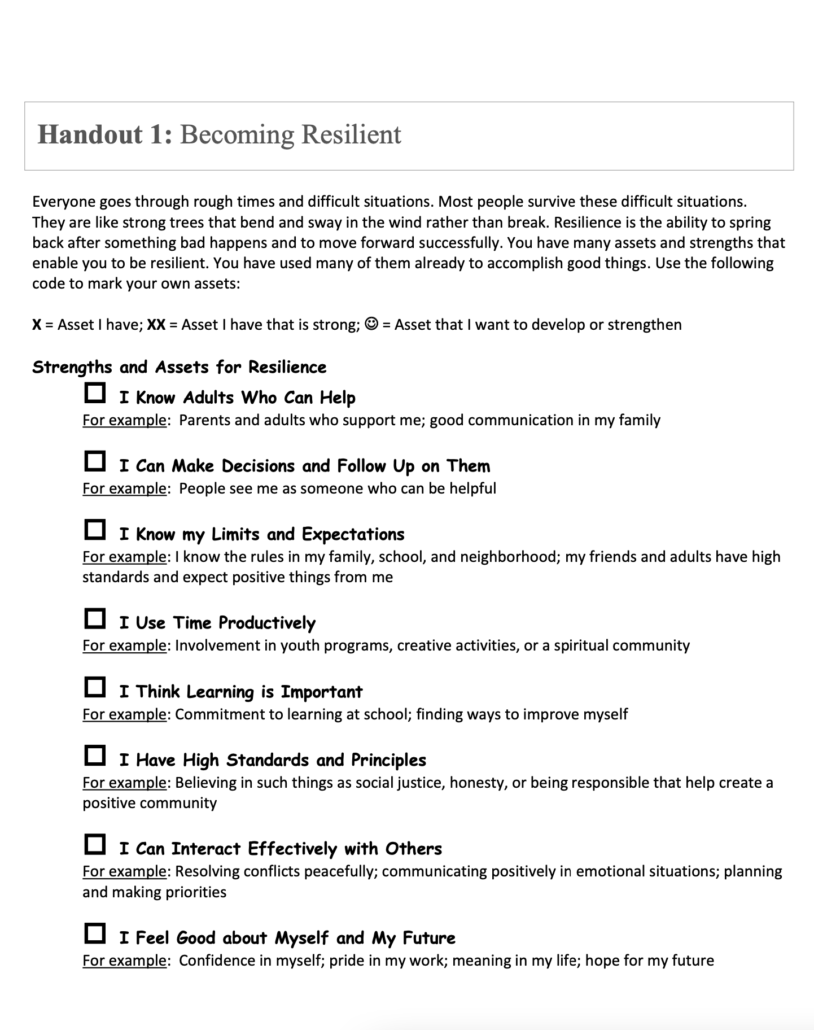
25 Resilient Leaders
We all want to succeed.
But life and fate throw so many curveballs our way that it can confuse and intimidate even the most resilient people.
Fortunately, there are inspiring examples of those who overcame hardship and tragedy to achieve amazing success.
These individuals show how there’s no place so far down you can’t come back from it.
Failure isn’t final, it’s fuel.
25 resilient people who overcame failure to achieve huge success
1) Charlize Theron, actress
Charlize Theron is a South African actress who’s famous around the world for her incredible acting and beautiful elegance.
Theron grew up on a farm on the outskirts of Johannesburg, but life wasn’t easy.
Her dad was a violent drunk and frequently threatened to beat and kill Theron and her mom. One day, when Theron was only 15, her mom killed her dad during a fight.
Theron’s mom was found not guilty by reason of self-defense.
As for Theron, she had a lot of trouble fitting in at school, including various medical problems. It was only later began an acting career and rose to success.
The pain of her early life is not something Theron talks about often, but watching her best performances you can see the depth that she brings to the screen.
2) Elvis, rock star
Elvis is a great example of a famous failure.
From “Love Me Tender” to “Blue Hawaii,” almost every Elvis song is a memorable piece of music.
But Elvis himself was no instant success. In fact, he grew up feeling like he didn’t fit in and did terribly in school, including in music class.
When he started trying to become a musician it went awfully, and he ended up taking a job driving trucks instead.
Still, the dream didn’t die and Elvis kept putting in time at the studio and playing gigs.
Eventually, it paid off big time, with his debut album Elvis launching him into superstardom in 1956.
3) Michael Jordan, athlete
Michael Jordan isn’t shy about all the times he failed.
In fact, he says that all the missed shots are what built him into the athlete he became.
Looking at Jordan’s success on the court, many aren’t aware that he was dropped from his team in high school and was seen by coaches at the time as a slacker.
Jordan didn’t let it get to him and kept practicing harder and harder until making it onto the Tarheels at the University of North Carolina and on to the Chicago Bulls.
All of this was for one simple reason, according to Jordan: never giving up.
As he says:
“I have failed over and over and over again in my life. And that is why I succeed.”
4) Tony Robbins, motivational speaker
Tony Robbins is a bestselling author and motivational speaker who’s helped turned millions of people’s lives around.
But Robbins himself never had an easy ride of it.
He grew up in an abusive home with a poor stepfather, and his mom forced him to leave home when he was only 17.
Robbins drifted, including working as a high school janitor. He was overweight and depressed, believing he would never amount to anything.
Then he began to work on himself including his health, outlook and job prospects.
He’s now worth millions and idolized all across the world.
As Robbins says, real change doesn’t happen in the mind:
“A real decision is measured by the fact that you’ve taken a new action. If there’s no action, you haven’t truly decided.”
5) Nelson Mandela, leader


Nelson Mandela was never a failure, but he certainly got handed some bad cards.
The renowned South African leader was put in jail due to political persecution and stayed there for 27 years.
What would have made most people give up completely, only made Mandela more determined than ever that justice come to pass.
He continued to oppose apartheid and stand for his beliefs, leading the nation after finally getting out of jail.
In jail he famously kept a note with the lines from Henley’s poem Invictus:
“I am the master of my fate:
I am the captain of my soul.”
6) Oprah Winfrey, TV star
Oprah grew up poor and mistreated in the inner city of Milwaukee, Wisconsin.
She got impregnated by relatives who were sexually abusing her when she was only 14 years old and had a miscarriage.
This tragedy might have sunk most people into lifelong bitterness, but Oprah went on a journey of self-discovery and empowerment, entering journalism and overcoming numerous obstacles for a woman of color.
She went on to become one of the most loved celebrities in the world and host her show which reaches millions.
Instead of feeding fury and bitterness, Oprah has let her early trauma contribute to her compassion and strength.
7) JK Rowling, author
Harry Potter author JK Rowling is an incredible success story that begins with outer failure.
When she was writing her novels, Rowling was struggling immensely.
She was a single mom who could barely make ends meet and her books were getting zero interest.
Her tale of a misunderstood boy wizard was rejected dismissively by dozens of publishers who said it didn’t have merit.
Finally, Bloomsbury books decided to accept it, giving Rowling an advance of 1,500 British pounds (only about $2,050).
Despite this slow start, Rowling has gone on to become one of the world’s most recognizable names, inspiring and touching everyone with her tales.
8) Walt Disney, animator
Walt Disney built an empire that lasted until this day.
He’s inspired magic in so many people’s childhoods, but his own path to success was very rocky.
Starting out as an illustrator in his late teens, Disney was faced with criticism from his newspaper editor who said he didn’t have talent.
Disney said that this criticism early on helped shape him.
When he later moved to Hollywood and started a studio with his brother Roy, he thought about the harder times starting out in his career and it helped motivate him.
As Disney said:
“I think it’s important to have a good hard failure when you’re young… Because it makes you kind of aware of what can happen to you.
“Because of it I’ve never had any fear in my whole life when we’ve been near collapse and all of that. I’ve never been afraid.”
Walt definitely gets it.
9) Bethany Hamilton, surfer
Bethany Hamilton is an amazing surfer who came back from childhood tragedy to soar to epic heights in the pro surfing world.
Hamilton was born in Hawaii and started surfing at age three, encouraged by her enthusiastic parents
Tragically, she was bitten by a shark when she was only 13 and lost her arm.
This would have been the end of a surfing career for many, but Hamilton kept right on going, winning huge championships and inspiring the world.
The 2011 film Soul Surfer chronicles her journey and how she’s never given up.
10) Stephen King, novelist
Today, Stephen King is one of the most famous horror writers on the planet, but for years he was a nobody getting rejected by every publisher he pitched.
Growing up, King wrote all the time but his work got rejected almost every time and people told him to give up.
He worked in a laundromat and donut shop before attending university, but things weren’t looking good.
King’s first book Carrie about a high school prom gone very wrong is now recognized as a horror classic.
But at the time he was pitching it in the early 1970s, publishers told him it was too twisted and dark.
After several dozen places turned it down King got angry and threw it away. His wife fished it out of the trash and told him not to give up.
It was published in 1974 and launched King’s massive career success.
He’s since sold hundreds of millions of books and is perhaps the most recognized writer in modern literature.
11) George Lucas, filmmaker
When most of us hear the name George Lucas, we immediately think of Star Wars and its massive success.
However, Lucas had a hard time of it starting out and his vision almost never made it to the silver screen.
The main studios in Hollywood all thought the Star Wars concept wouldn’t sell and they turned it down.
Finally, Fox took him up on the franchise, thinking back to his work in American Graffiti and hoping it would also be a success.
It wasn’t easy, however, because Lucas’ idea for Star Wars was widely misunderstood even by the people working on the film.
He was confident in his vision, however, and the series went on to become the spectacular success it is today.
12) Keanu Reeves, actor

If you think of Keanu Reeves there’s an image that comes to mind of a self-assured, easygoing guy who stars in many of your favorite films.
But Reeves had a very rough upbringing and background.
Reeves grew up overseas in Lebanon to a British woman and an American man. His dad left them when Keanu was only three.
His mom kept marrying new guys (four in all) and Keanu had to change schools constantly as a kid.
He ended up in Canada where he got depressed and dropped out of school when he was 17 and moved to Hollywood.
Finally, things seemed to be going his way and he met a girl and she got pregnant. Then the baby died at eight months, and a year-and-a-half later so did the woman he’d loved.
Keanu didn’t give up and worked his way up to star in 1989’s Bill and Ted’s Excellent Adventure and eventually 1999’s Matrix.
13) Colonel Harlan Sanders, chicken enthusiast
Colonel Harlan Sanders is the man who started Kentucky Fried Chicken.
We can thank the Colonel for his special recipe, but we may also not be aware of how many tears went on behind the scenes.
The fact is that Sanders didn’t just suddenly pop up and make it big.
He kept trying to sell his special recipe to restaurants and they dismissed him: over 1,000 rejections in total.
Finally, at age 62 he found a place in Utah that would give him a shot. The rest, as they say, is history.
When it comes to resilient people who overcame failure, Colonel Sanders deserves to be right up there with the very toughest around.
Also, if you want a laugh check out the new romantic comedy about Sanders called A Recipe for Seduction.
14) Jeff Bezos, businessman
Jeff Bezos may be the richest guy on earth (or in space), but he didn’t always have the golden touch.
Back when he wore mom jeans and looked even more like a member of the Heaven’s Gate Cult than he does now, Bezos was having a hard time of it.
His founding of Amazon was going quite well, ballooning out from an initial $10,000 investment and garage warehouse.
Then Bezos decided to buy half of a website called pets.com. It did really badly and went bankrupt in several years, leaving Amazon out by $50 million, which at the time was a lot of cash for the site.
Bezos took the hit and kept going regardless, turning Amazon into the internet-dominating behemoth it is today.
As he’s said of the past struggles, “you have to be willing to fail” if you really want to innovate and succeed in business.
15) Mark Cuban, entrepreneur
Mark Cuban owns an NBA team and has more money than you can shake a stick at.
He’s also well known for his hosting role on Shark Tank.
But Cuban is far from an overnight success story.
He earned his stripes as an entrepreneur, delivering papers and doing any job he could find whether he had skills for it or not.
By his mid-20s he’d even managed to lose a job at a bar because of difficulty properly opening bottles of wine and he got tossed out of a cooking job due to eating too many of the dishes.
But he had a hardworking attitude and really wanted to succeed.
He started up his own company offering software and helping with computers and it started doing really well.
He kept moving up the ranks until eventually selling another company to Yahoo and becoming a multimillionaire.
16) The Beatles, musicians
The Beatles weren’t always the household name they are today.
At one time this ragtag crew was underappreciated and couldn’t catch a break.
They had to play the red light district of Hamburg for a long time before anyone noticed who they were or even started listening, and the idea of them becoming famous would have been seen as absurd by a random music fan at the time.
They famously drove through a blizzard to go audition at a studio in 1961 and were told that their style would never be popular by the head of talent acquisition.
He was dead wrong, and they soon were picked up by Parlophone, going on to superstardom.
17) Sylvester Stallone, actor
Sylvester Stallone is famous as an action star, but he’s also a talented writer, director and painter.
His road to the top was extremely difficult and he grew up in poor conditions with people doubting him.
He was mocked for his way of talking and lifted a broom handle with cinder blocks on it for weights.
He dreamed of being an actor and went all around New York for years trying to catch a break. He got nothing and even had to sell his beloved dog for $25.
At one point he had no home and slept in the bus station, but he never gave up and wrote the script for Rocky.
This was finally his break. But agents said his condition that he be the star was a no-go, so he held out, eventually taking far less than the first offer.
In the end, the film – starring him – was a massive success. Stallone’s belief in himself and refusal to back down paid off big time and won everyone’s heart on and offscreen.
18) Charlie Chaplin, comedian

Charlie Chaplin is a renowned comedian of the past century who grew up in less than comedic circumstances.
He was extremely impoverished as a youngster and his dad left the family when he was only two.
By age 7, Charlie lived in a poorhouse where they had basic food to eat and two years later his mom was put in a psychiatric facility for her mental health problems.
It was a horrible start to life, but Chaplin didn’t let it sap his spirit for the comedic.
He kept joking and prancing around despite the horror of his early life, and he went on to become one of the most iconic funny men of all time.
19) Peter Dinklage, actor
If you’ve seen Game of Thrones or a number of other fine films such as the fine 2003 film The Station Agent, then you’ve seen Peter Dinklage at work.
This talented actor has won a devoted following for his sheer power on screen.
But for many years he was underestimated and dismissed due to having dwarfism.
He was seen as only a joke actor suited for gag parts of laughs. He even took side jobs such as spreadsheet work in order to turn down things like being a leprechaun in an alcohol ad.
After never giving up and making himself known as a serious dramatist in The Station Agent, Dinklage was eventually cast as Tyrion Lannister in Game of Thrones.
20) Babe Ruth, home run hitter
Babe Ruth is famous for one reason: hitting home runs.
What’s less well known is all the times he didn’t hit home runs.
The point is that Babe Ruth went to bat a hell of a lot, and he had a very high amount of strikeouts. In fact, despite his 714 career home runs, he also had 1,330 career strikeouts.
That’s a lot of misses, folks.
There was actually a long era where Babe Ruth had the strikeout record, not just the home run record.
His quote on this issue is perfect, however:
“Every strike brings me closer to the next home run.”
21) Lily Rice, paralympian
Lily Rice is a paralympian from Wales, UK.
She’s not world-famous – not yet – but she deserves to be.
Since birth, 13-year-old Lily has had spastic paraplegia which makes it difficult to walk or run.
That hasn’t made her give up and she’s a competitor in Wheelchair Motocross, recently landing a successful backflip.
She’s very encouraging to other athletes and is a perfect example of never giving up even when life gives you setbacks and starting disadvantages.
22) Chris Pratt, actor
Chris Pratt is another successful star who had to fall to the very bottom before he rose up.
Pratt had a very hard time making his way to the top and eventually ended up sleeping in a van at 19 in Hawaii.
He was working in a restaurant at the time and had so little money that he ate leftovers from customers in order to survive.
There’s a reason that there are so many of these hard-luck stories with celebrities and others: because that’s often the kind of struggles people go through before major success.
Pratt is a devout Christian and hardworking actor who always maintains a positive attitude.
He’s always encouraging others and has made it clear that no matter what it takes, it’s always worth doing your best and leaving the rest to God.
23) Ludwig von Beethoven
Beethoven wrote some amazing music, but he had a very hard life.
He grew up playing violin and was terrible. He also wasn’t very into it, at least at first.
He kept up with music and eventually started writing as well, eventually going on to write the compositions we all know and love.
Most of all, Beethoven did most of his most notable work while he couldn’t hear a thing and was deaf.
24) Stephen Hawking, scientist

Stephen Hawking is one of the greatest scientific minds who’s ever lived.
However, Hawking had a very difficult life due to his early diagnosis at age 21 with amyotrophic lateral sclerosis (ALS).
At first, doctors said Hawking wouldn’t last more than a year or two anyway.
But he lasted many more years, going on to live to 76 and writing 15 books that expanded everyone’s ideas of physics, astronomy and the universe we live in.
Hawking never gave up when he was handed a death sentence or forced to communicate through eye movements.
Instead, he doubled down on the work he was doing and succeeded beyond anyone’s wildest dreams.
As Hawking said:
“Look up at the stars and not down at your feet. Try to make sense of what you see, and wonder about what makes the universe exist.
“Be curious.”
25) Jack London, writer
Jack London was an incredible writer who was born in 1876 and died in 1916.
Growing up I couldn’t get enough of his books like White Fang and The Call of the Wild.
London had a very hard life, however. His mom tried to kill herself when she got pregnant due to pressure to have an abortion from her abusive husband William Chaney.
London grew up adopted and loved writing at university, but attempts to reconnect with his family were rejected and his dad even denied being his dad.
London was devastated and moved to the north to the Klondike to be alone, after which he started writing about the experiences.
This wasn’t just a pipe dream: London wrote 1,000 words a day no matter what. Publishers said it was junk but he kept trying.
At age 23 he got published for the first time and by 27 he was a major national success with the publication of The Call of the Wild.
Finding your inner resilience
Do you know what holds people back the most in achieving what they want? A lack of resilience.
Without resilience, it’s extremely hard to overcome all the setbacks that come with success. Look at all the examples above! They didn’t reach success the first time around, it took years of resilience to reach the lives they have now.
I know this because until recently I had a tough time overcoming a few hurdles holding me back. I had little direction and not much hope for the future.
That was until I watched the free video by life coach Jeanette Brown.
Through many years of experience, Jeanette has found a unique secret to building a resilient mindset, using a method so easy you’ll kick yourself for not trying it sooner.
And the best part?
Jeanette, unlike other coaches, focuses on putting you in control of your life. Living a life with passion and purpose is possible, but it can only be achieved with a certain drive and mindset.
Your inner champion is just waiting to be discovered.
Let’s make this a list of 25 into a list of 26 in the near future.
Overcoming obstacles
7/10 Leadership 2: Put-Down, Turn Around
Negative VS Positive Thoughts
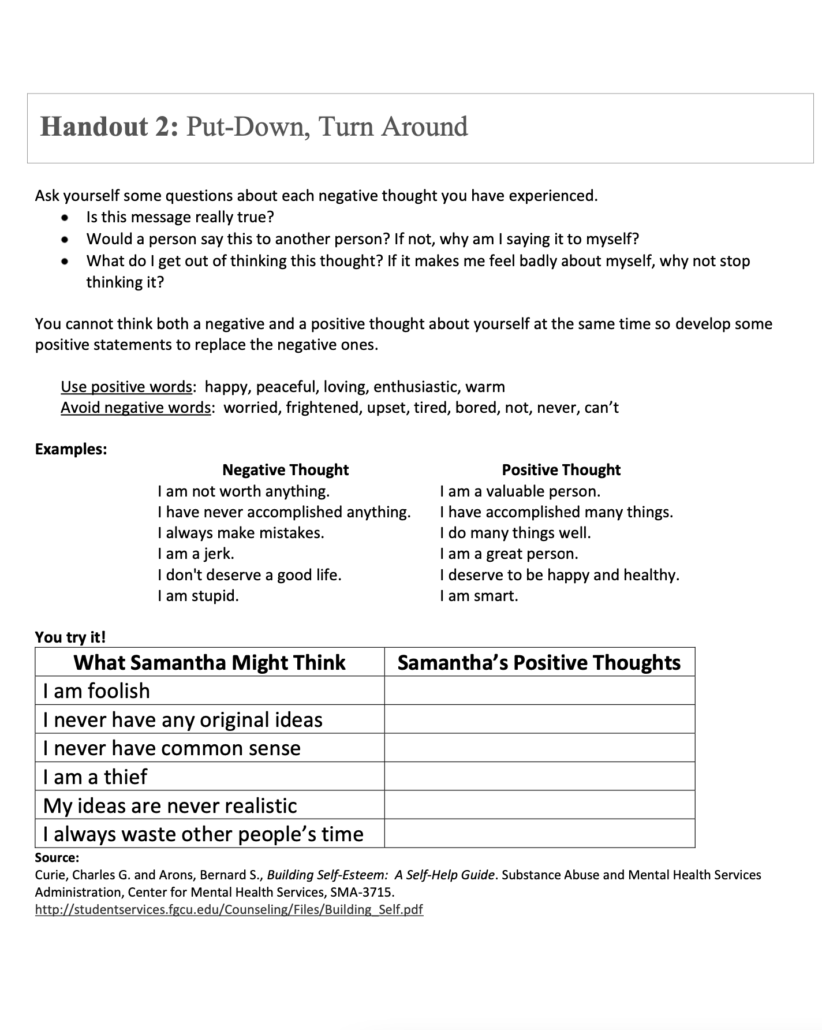
Believe in yourself!
7/11 Leadership 3: Positive Values
List of Values
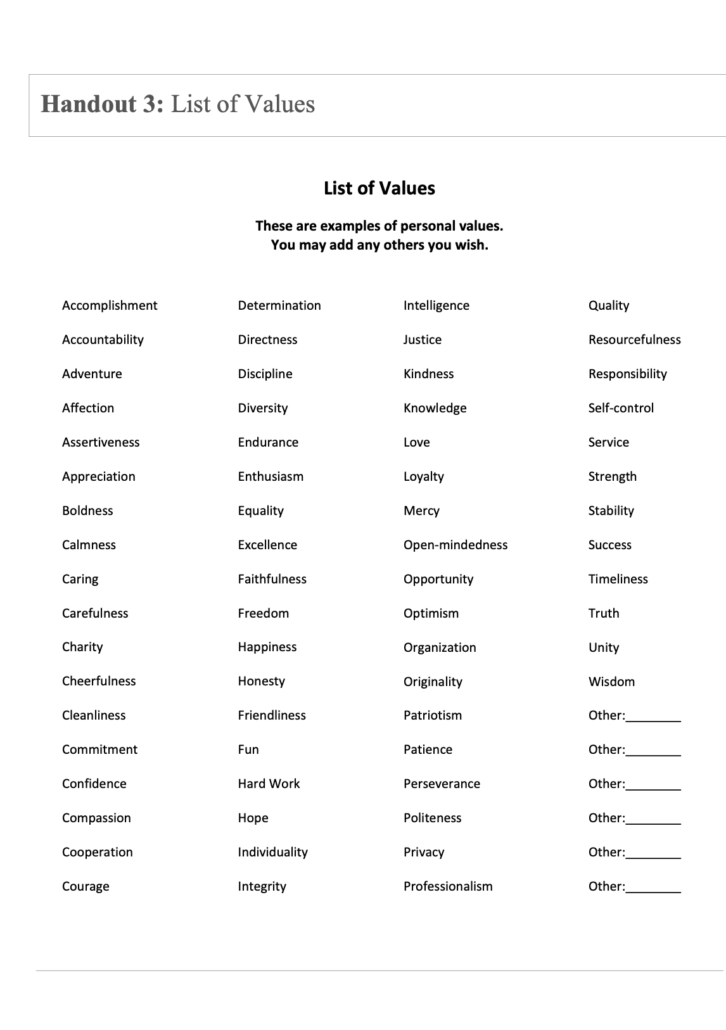
Values vs Goals
7/12 Leadership 4: Active Listening
Show You Are Listening
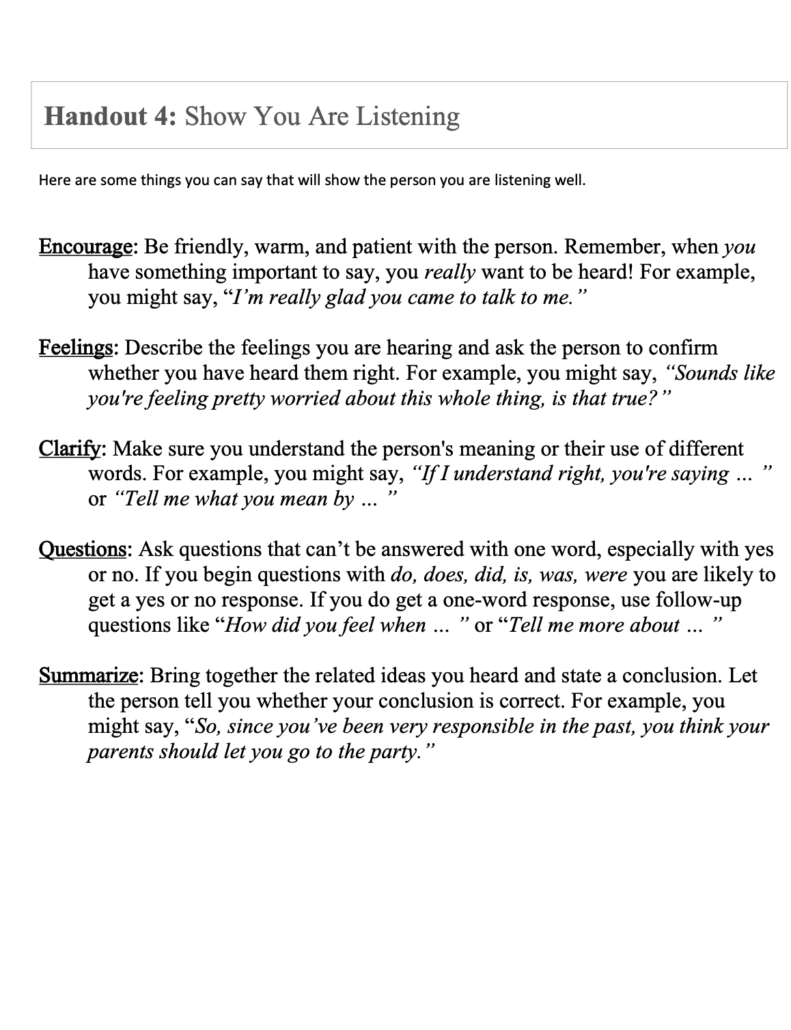
Are you a good listener?
7/13 Leadership 5: Positive Communication
Direct & Indirect Communication
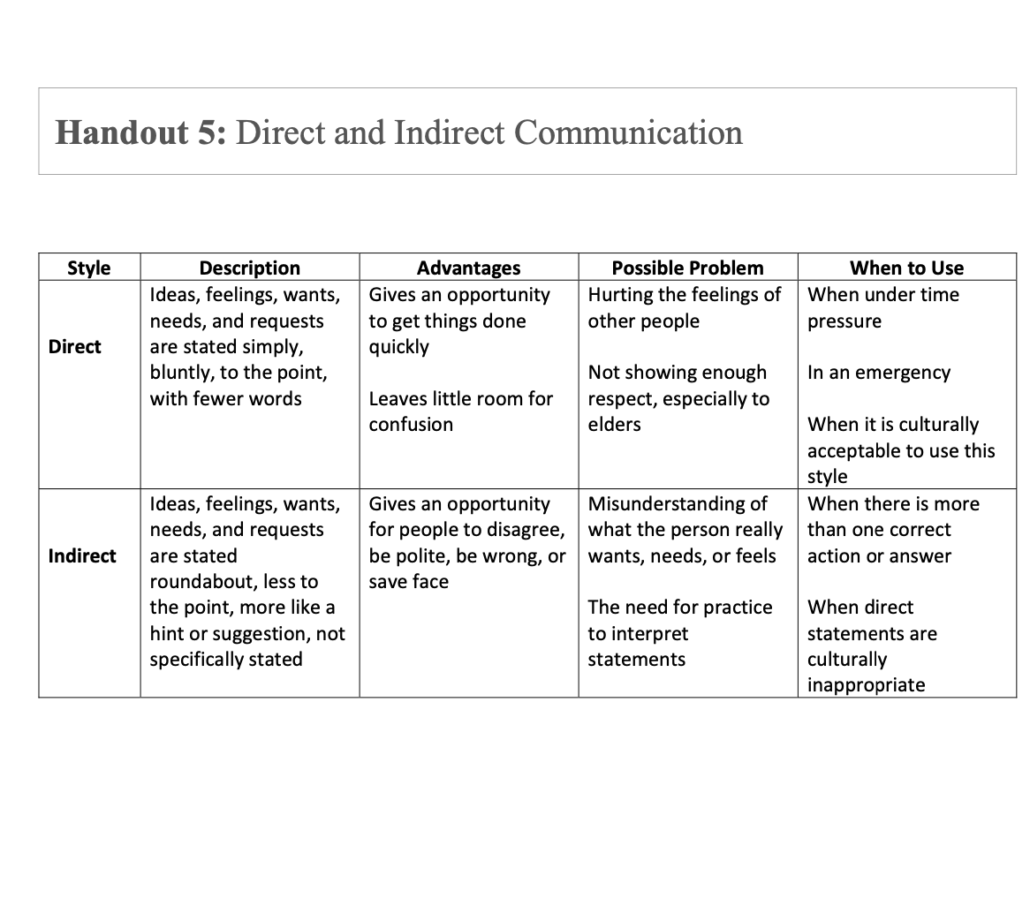
How miscommunication happens